The Rerooted Compass
4 Questions to Ask Before You Move Abroad

In 2009 I got an offer to move to Saudi for work. It was a much higher salary but a way less exciting lifestyle. I would also leave my parents’ house and live by myself. Those were the only 3 factors I looked at to make my decision.
In 2020 I got an offer to relocate to Switzerland from Dubai. 15% salary cut but a country with 4 seasons and insane nature. Also long-term security and a pension plan. I only looked at those 3 factors to make my decision.
Both times, what I faced when I arrived was a much more complex reality than I had imagined. My decision-making was naive. I wasn’t looking at the whole picture. I wasn’t preparing myself to face the new reality.
I looked back. I learnt from my experience settling in 4 different countries. I learnt from the experiences of those around me. And I built a framework on how to make the decision to leave or not.
It’s the stage of the expat journey that I call: Pre-rooted.
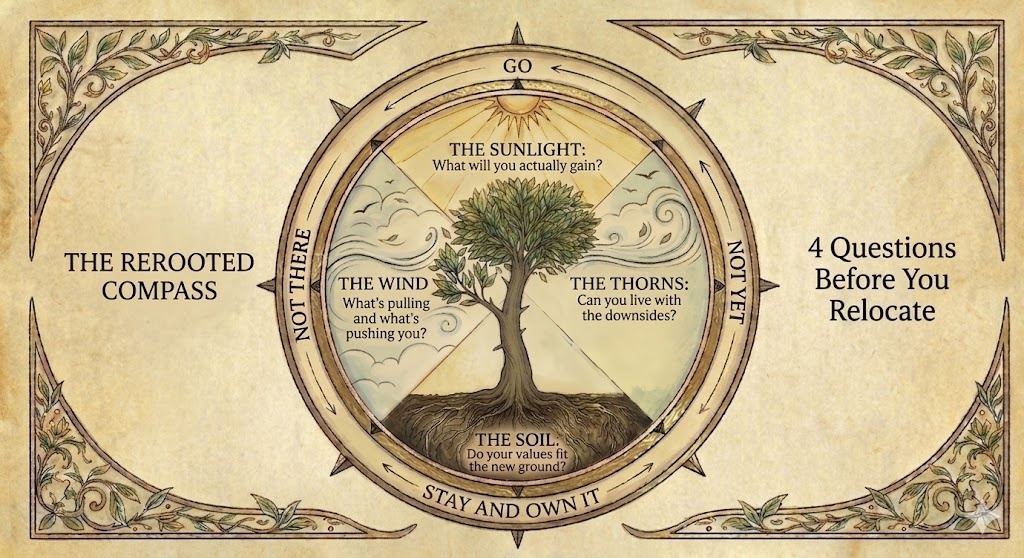
For that stage you need a compass. Here is the Rerooted Compass.
Why Most Of Us Get the Move Decision Wrong
This is what usually happens: You get the offer, the title is better, the salary is higher, maybe the city sounds exciting. You ask your partner, your parents, maybe a friend who lived there once. Everyone gives you their opinion based on their own fears and fantasies. You make a gut decision that looks like a rational one.
Then you land. And the things you didn’t think about, the things that actually determine whether you’ll thrive or slowly fall apart, will start showing up uninvited.
The Rerooted Compass forces those questions before the plane ticket. Four points of honest reflection, each one rooted in a botanical metaphor. Because moving abroad is transplanting. You’re pulling yourself out of one soil and placing yourself into another. That process has rules. Ignore them, and the plant crumbles. Respect them, and something beautiful grows.

1. The Soil
Do your values fit the new ground?
The most important understanding a person needs to have is: what are their own values? What are the core, most important things in your life that make you who you are?
Do you value personal freedom? Nature? Family? Religious community? Family proximity? Independence? Social life? Social warmth? Discipline? Order? Spontaneity? Novelty?
You need to do this exercise first, before you explore moving to a new place. Because the biggest reason for personal misery is not living according to your values. When your values are needs that aren’t being fulfilled, you suffer. And this is very likely to happen when you move to a new country.
So the first step is to define your core values, and then compare them to the values of the country you’re considering.
If you’re really into self-discovery and want to go the long way, there’s a book called Values Clarification by Dr. Sidney B. Simon. It has 76 different exercises to help you discover yourself and your values.
And if you want a shortcut, sit with yourself for an hour and do these two visualizations:
1) Remember a peak moment in your life. A moment where you felt most alive and everything was going well. Recall everything about it. What were you doing? Who were you with? What made you feel alive? What was present? What was real? Then journal about the values that show up from this moment.
2) Remember a frustrating moment in your life. A time where you felt extremely angry or unsettled, something wasn’t sitting right with you. Recall the details and uncover what was being stepped on. What was not honoured? What values were being challenged? Then journal about the values that show up from this moment.
Once you have clarity on those values, compare them to the country you’re considering: will I be able to live my values there? Or will there be a conflict?
Where there’s alignment, you’ll have energy. Where there’s tension, you’ll be spending energy. You need to know which is which before you decide to go.
2. The Wind
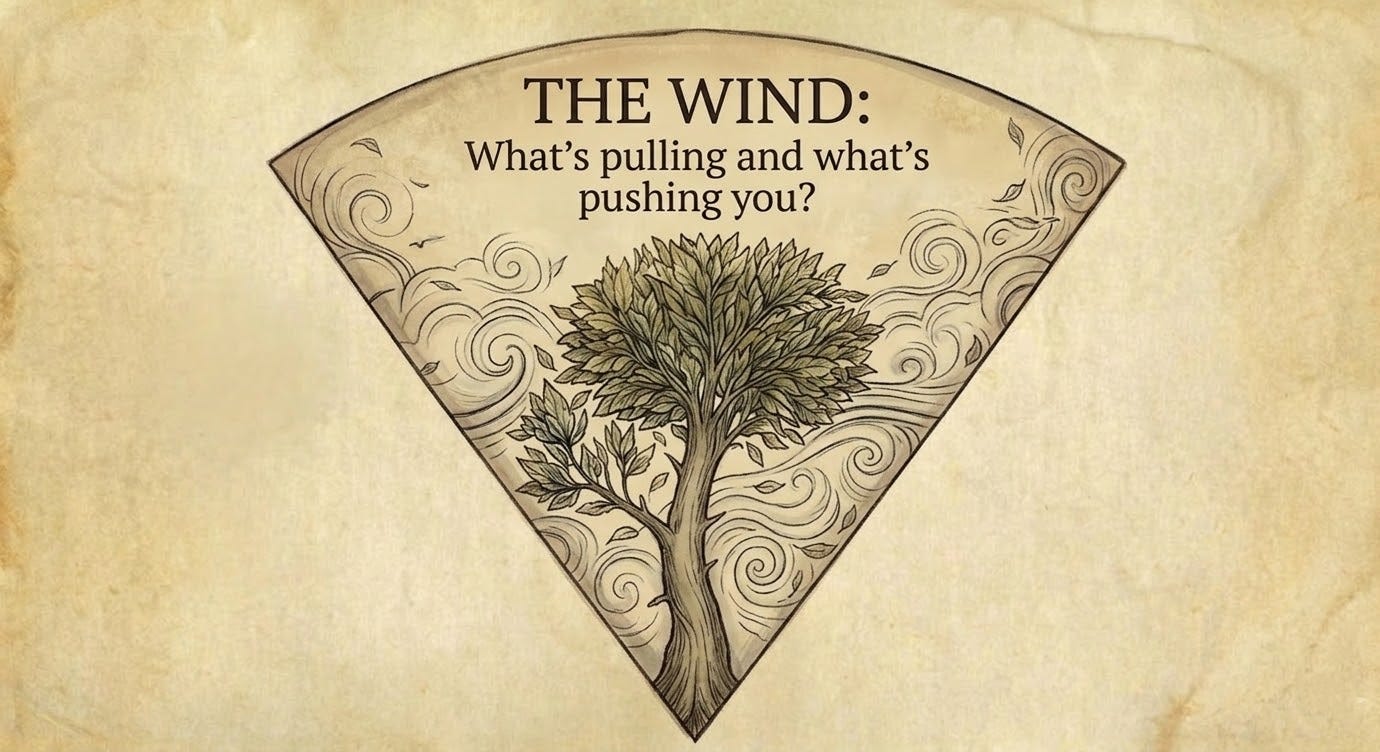
What’s pulling you and what’s pushing you?
There’s an Arabic view that captures this tension beautifully: رياح (riyāḥ), winds, plural. In Arabic, wind is almost always spoken about in the plural because it never comes from just one direction. Your reasons for moving are the same. Multiple forces in multiple directions, some at your back, some in your face.
When I left Cairo, I told myself it was about career growth. That was partly true. But I was also escaping the monotony and familiarity. A huge city had started feeling small. Both forces were real. Both were valid. But they required different strategies.
If you’re running toward something, you can measure progress. You know what arrival looks like. If you’re running from something, you might land in a new city and realise the thing you were escaping came with you. The restlessness. The dissatisfaction. The feeling that this isn’t quite it. These things travel well.
I’ve met expats in Dubai who moved to escape stagnation back home and built extraordinary careers. I’ve met others who moved for the same reason and spent three years in a luxury apartment wondering why they still felt stuck. The difference was whether they’d been honest about which wind was strongest.
The exercise: Two lists. “I’m moving toward ______” and “I’m moving away from ______.” Write them fast, without editing. If the “away from” list is longer, spend more time understanding what you’re really looking for before you decide where to find it.
3. The Sunlight
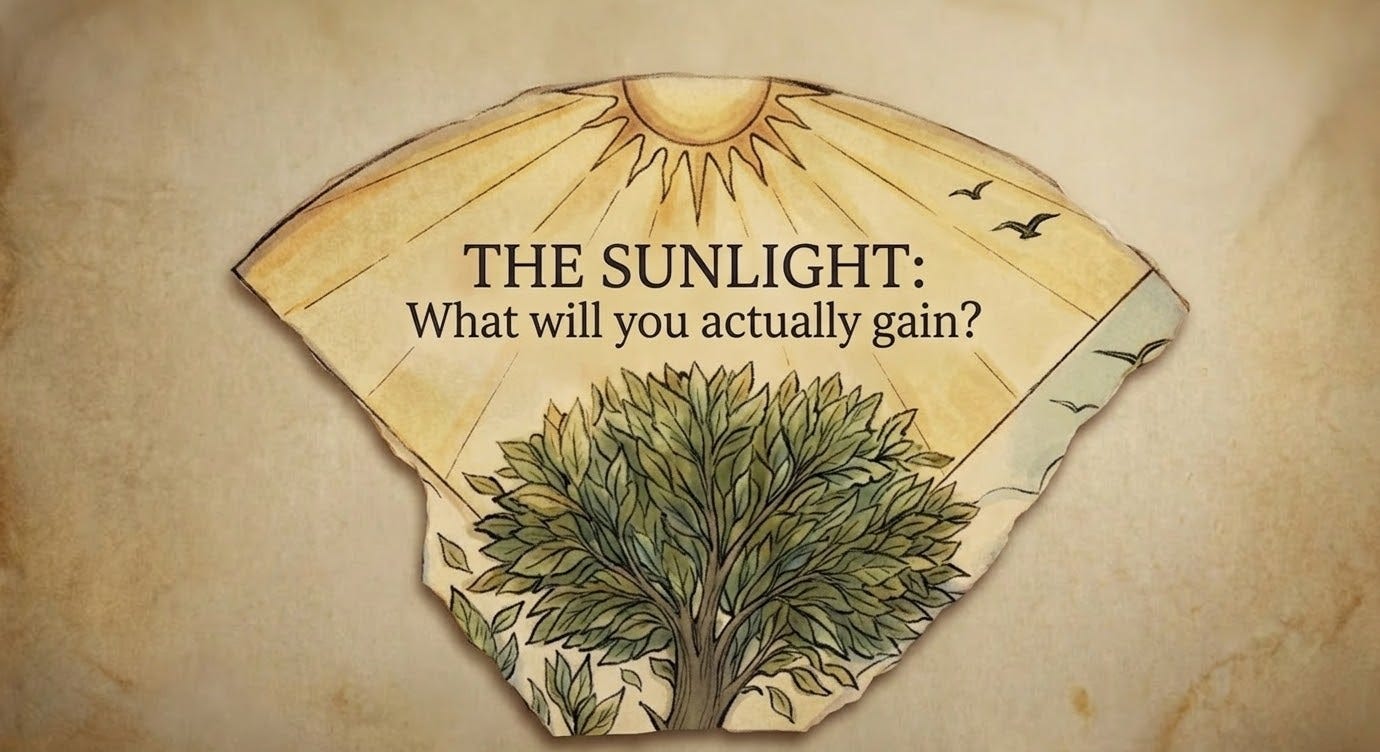
What will you actually gain from the move?
Sunlight is the growth factor. The career acceleration, the financial step-up, the independence, the expanded worldview. It’s the reason you say yes.
But sunlight can be a mirage.
When I moved from Jeddah to Dubai, the promise was clear: a more open, dynamic, internationally connected city. And Dubai delivered on that.
When I later considered Switzerland, the picture was more nuanced. The salary was higher but the taxes and cost of living ate into the gap. I ended up with a net income reduction. The professional culture was slower, more consensus-driven. Someone used to the pace of the Arab world would need to recalibrate.
And yet. Switzerland gave me exactly what I was looking for at that point in my life: career progression, fertile soil to build a family, short and long-term security, and a life in nature. The sunlight was real. It just looked different from what I’d been used to.
I’ve watched a colleague accept a Singapore posting because the package looked incredible on paper. Six months in, the housing allowance didn’t match the reality of the market, the schooling options for his three kids were more limited than the relocation consultant suggested, and the career acceleration he’d imagined was slower because the regional office had less visibility than headquarters. The sunlight was there. It was just softer than what he thought.
The pressure test: Write three sentences that start with: “In 3 years, because I made this move, I will have ______.” Career gains. Financial position. Personal growth. Skills. Relationships. Now call someone who’s actually lived it. Someone who’ll give you the Tuesday evening version, not the social media reel.
If you can’t write those sentences with conviction, you’re not ready.
4. The Thorns
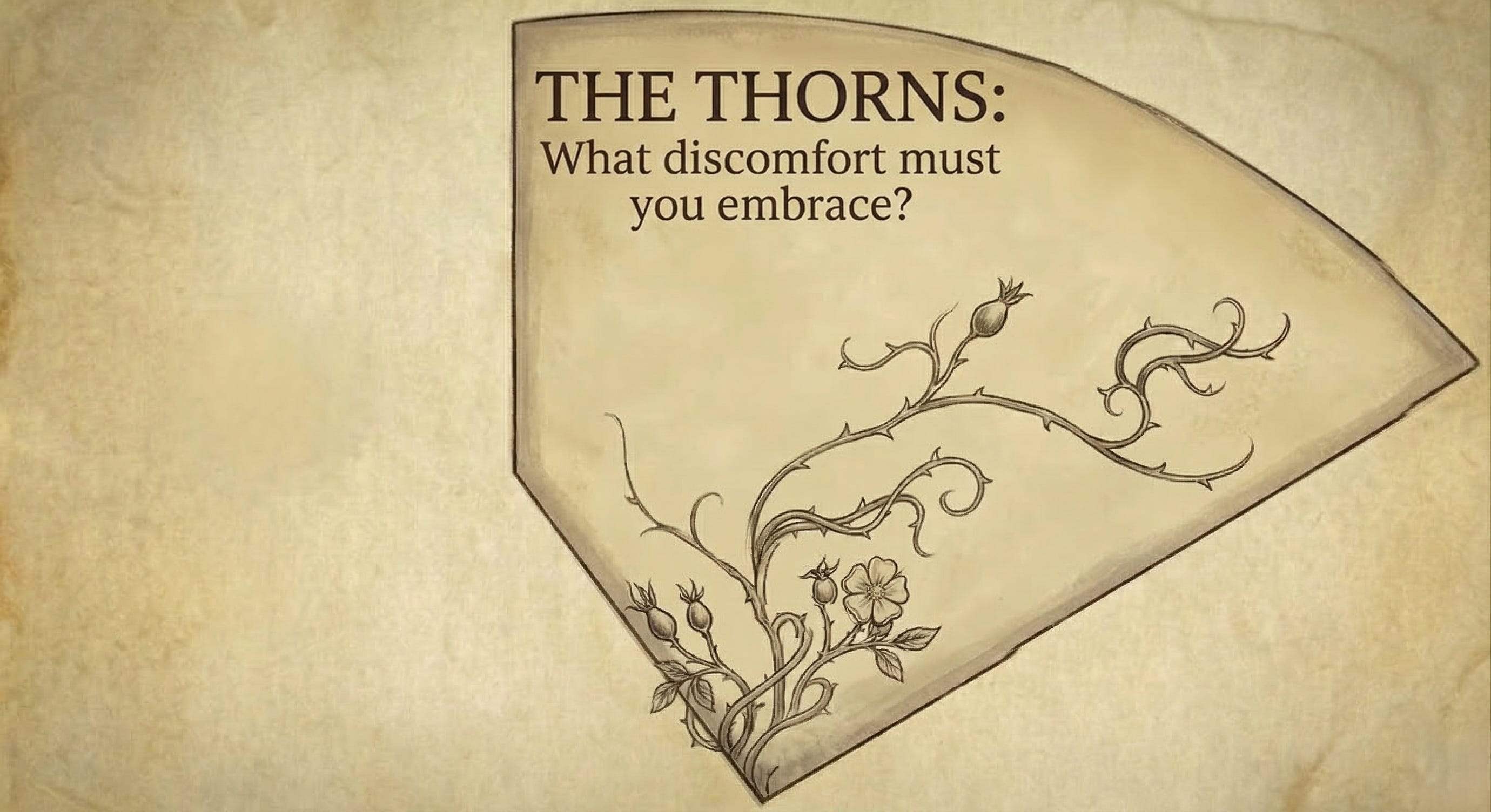
Can you survive the realistic downsides, and are you willing to pay the price?
There is no perfection in life. It’s almost impossible that a move would come with no downsides. There are always challenges that need to be addressed and planned for.
But this is what I’ve learnt: the thorns and the price you pay for them are the same conversation. Every thorn you identify is something you’ll need to consciously let go of or actively adapt to. In botany, this is called pruning: cutting parts of a living plant so the remaining branches grow stronger. The thorns tell you where the cuts will happen. Your job is to decide whether you can make those cuts and still be whole.
Before my move to Switzerland, I sat with the thorns. What if my daughter struggles with the language confusion and the different social dynamics of a Swiss school and an Arab home? What if my wife, who’d built a life and friendships in Dubai over nearly a decade, feels isolated in a country where community takes years to break into? What if the career move doesn’t accelerate the way I expect?
I wasn’t being pessimistic or paranoid. I needed to know that these were realistic so I could prepare for them now, not later. They were realistic risks based on the experiences of people I’d spoken to. And some of them came true.
My daughter is learning 3 languages and I have to put deliberate effort into making sure she stays in touch with her Arabic origin. My wife struggled for years to find her footing and build a close circle of genuine friends. Her career took a turn from permanent roles to freelancing gigs. We felt lonely every winter and we missed our families. A lot.
Each of those thorns required its own pruning. I had to let go of the expectation that my daughter’s identity would mirror mine. My wife had to let go of the career path she’d built and find a new one. We both had to let go of the idea that community would come quickly. We didn’t fail, these were the price of the move. And because we’d named them in advance, we weren’t blindsided. We had strategies. Imperfect ones. But we had them.
Your kids will grow up in a foreign culture, and you’ll need to make peace with the identity that grows from that. Your partner may lose their career, their social life, and their sense of identity, all at once, and you’ll both need to actively rebuild. You might be an eight-hour flight away when someone you love gets sick, and you’ll need to live with that distance as a permanent feature of your life. These aren’t worst-case scenarios. They are business as usual for expats.
A friend of mine, a senior finance professional from India, turned down a London posting that would have been a significant career move. His wife had a thriving medical practice in Mumbai. His parents were aging. His kids were settled in school. The thorns required pruning he wasn’t willing to do, and his family wasn’t willing to bear. He chose to stay, and he chose it without resentment, because he’d done the calculation honestly rather than letting FOMO make the decision for him.
The exercise: Write the “worst realistic scenario.” The version that has a 30% chance of actually happening. The promotion doesn’t come. Your partner is lonely. Your kids take two years to adjust instead of two months. Your closest family member gets sick and you’re an eight-hour flight away.
Then next to each thorn, write what you’d need to let go of or adapt to if it came true. That’s your pruning list. If you can look at it and say “I can make these cuts and still be whole,” proceed. If the thought of it makes your chest tight at 2am, listen to that signal
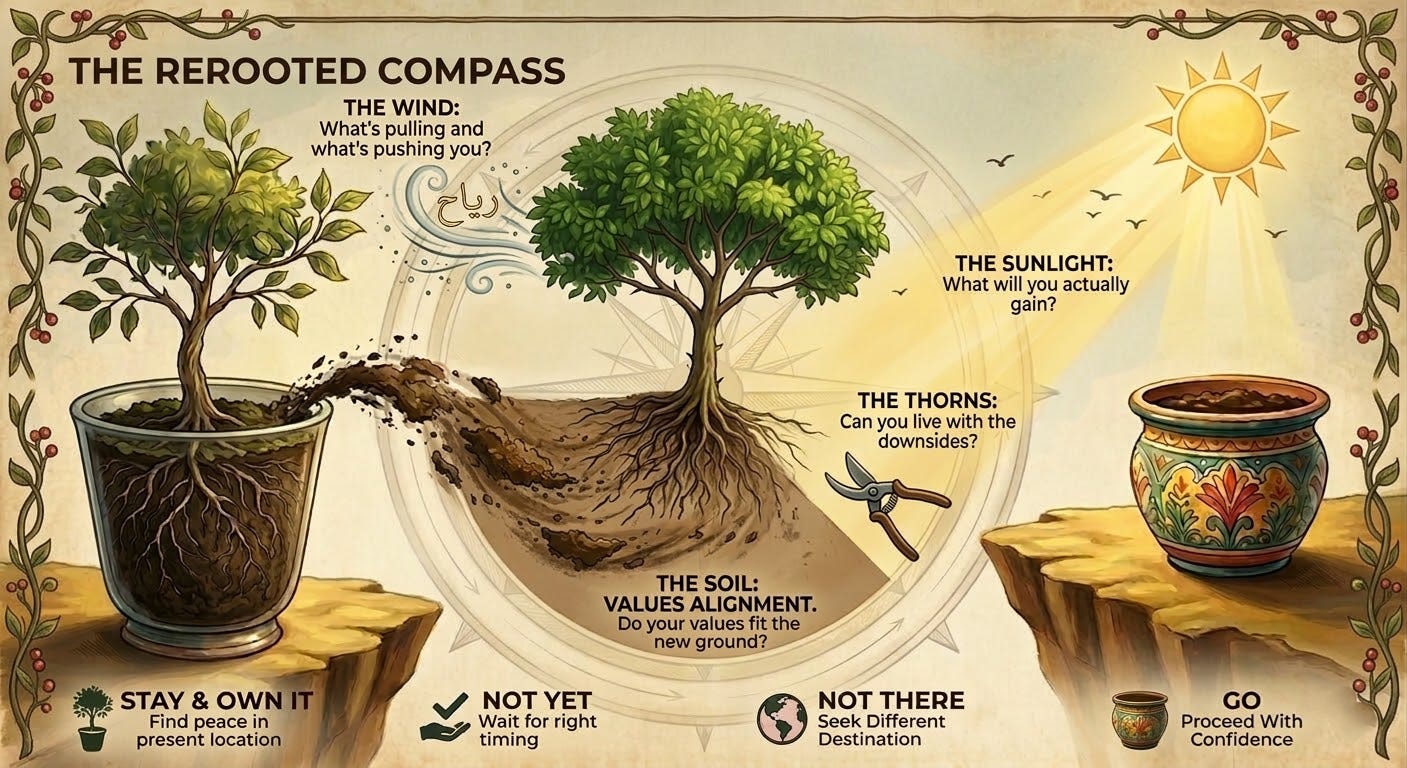
The Four Directions
After you’ve worked through all four points, you’ll land in one of four places:
Go. The soil fits. The wind is at your back. The sunlight is real and verified. The thorns are survivable and you’ve made peace with the pruning they require. This doesn’t mean it’ll be easy. It means you’re going in with your eyes open.
Not Yet. The move might be right, but the timing is wrong. Maybe the thorns are too sharp right now. An aging parent, a child in a critical school year, a partner who isn’t ready. “Not yet” is precision, not failure.
Not There. Moving makes sense, but this particular destination isn’t the right fit for you. The soil is wrong, or the sunlight is a mirage, or the thorns are too many for you to live with. That doesn’t mean you should stay put. It means you should keep looking for the right soil.
Stay and Own It. You’ve looked at it honestly and done your homework. The trade doesn’t make sense right now. You should feel genuine peace knowing you’re in the right place. Stop wondering. Start nurturing. No resentment. No “what if.” Full investment in the life you have.
That last one might be braver than all the others. There is no one-size-fits-all here.

Why This Matters
I’ve lived through four international moves across 17 years. The ones where I asked some of these questions, even imperfectly, went better. The ones where I skipped the hard reflection cost me time, energy, and peace I’ll never get back.
If you’re staring at an international opportunity right now, do yourself a favour. Before you call the relocation company, before you start googling apartments in the new city, before you tell your parents, sit with these four points. Give yourself a week with each one. Be ruthless in your honesty.
The move might still be the best decision of your life. But you’ll make it as a conscious choice. And that makes all the difference when the wind changes direction.
If this framework resonated, share it with someone who’s considering a move right now. And if you’ve already made the leap, which of the four points do you wish you’d spent more time on? Hit reply and tell me.